

Abstract
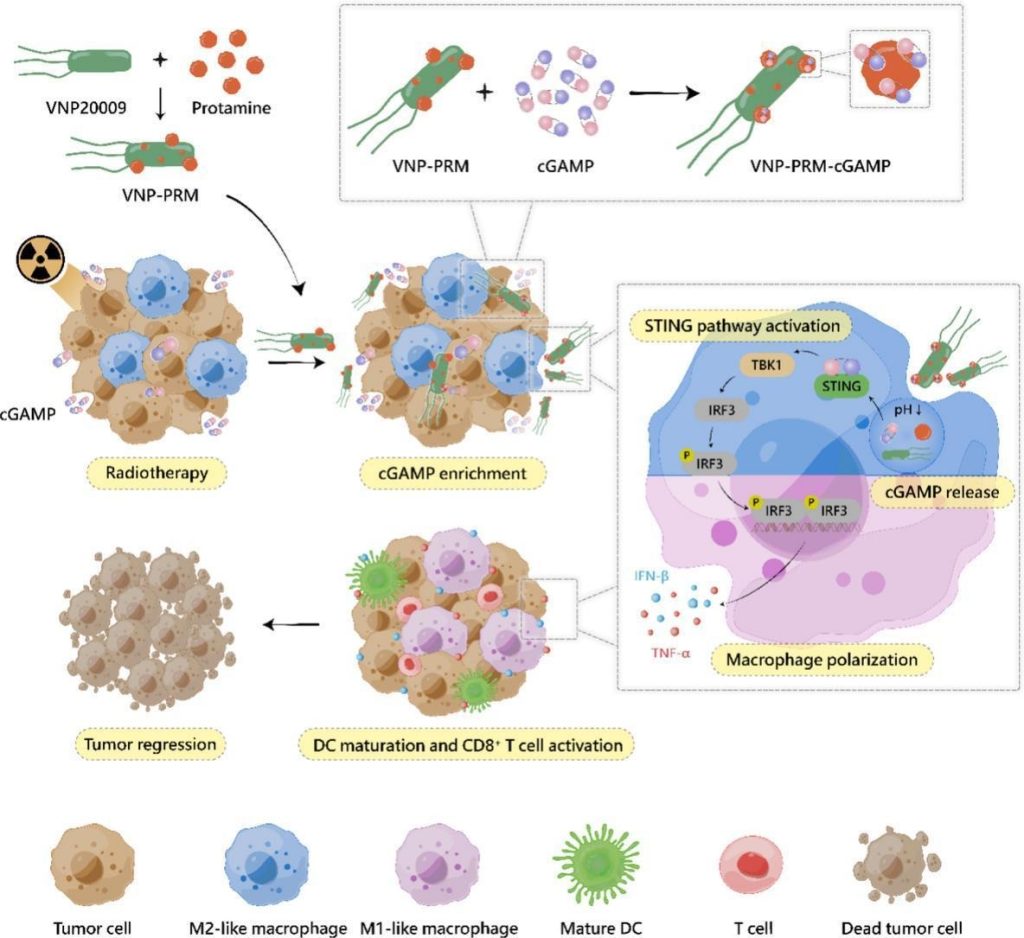
Immunotherapy has emerged as a promising therapeutic strategy for cancer. The activation of the stimulator of interferon genes (STING) pathway promotes the polarization of tumor-associated macrophages (TAMs) towards M1 phenotype, with 2′, 3′-cyclic guanosine monophosphate-adenosine monophosphate (cGAMP) serving as an inherent activator, which significantly accumulates in the extracellular space of the tumor sites following radiotherapy (RT). However, the electronegativity and hydrophilicity of cGAMP prevent it from crossing the cell membrane into TAMs, hampering subsequent immunotherapy efficacy. Here, positively charged protamine-modified Salmonella (VNP20009), called VNP-protamine (VNP-PRM), were prepared to enrich cGAMP and form a composite bacteria-drug delivery system with the capacity to enter TAMs freely. Via electrostatic interactions between the guanidine groups of protamine and the phosphate groups of cGAMP, VNP-PRM stably enriched cGAMP on their surface and neutralized the electronegativity of cGAMP. The uptake efficiency of cGAMP by TAMs was then significantly enhanced by the active delivery of VNP-PRM, whose inherent motility and cellular invasiveness endowed them with increased potential to bump against and enter the macrophages. Subsequently, the intracellular cGAMP synergized with the immunogenicity of the bacteria to activate the STING pathway and drive M1 polarization, thereby boosting tumor eradication. Therefore, antitumor immunotherapy can be optimized through in situ enrichment and delivery of post-RT cGAMP to TAMs by the engineered bacteria.